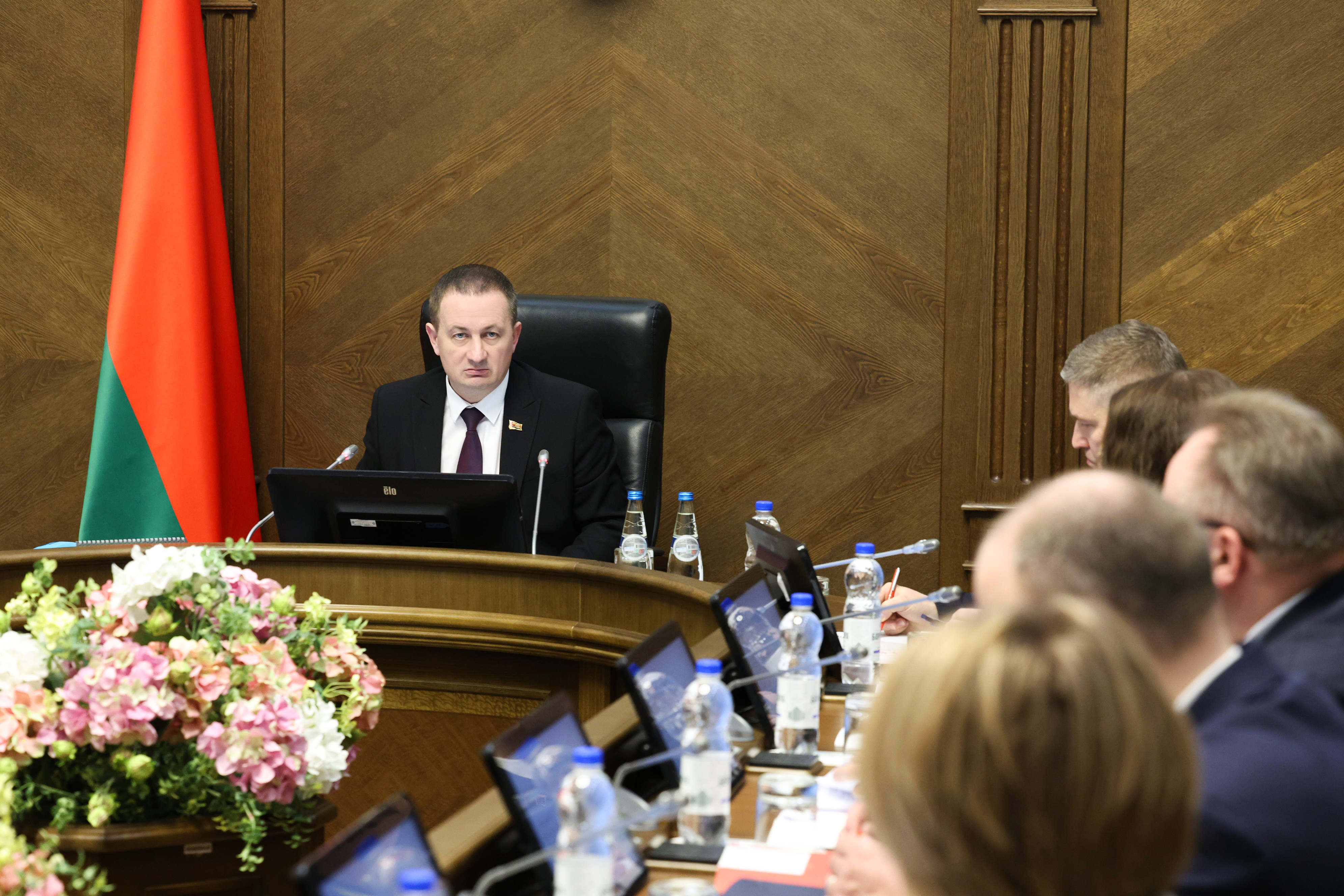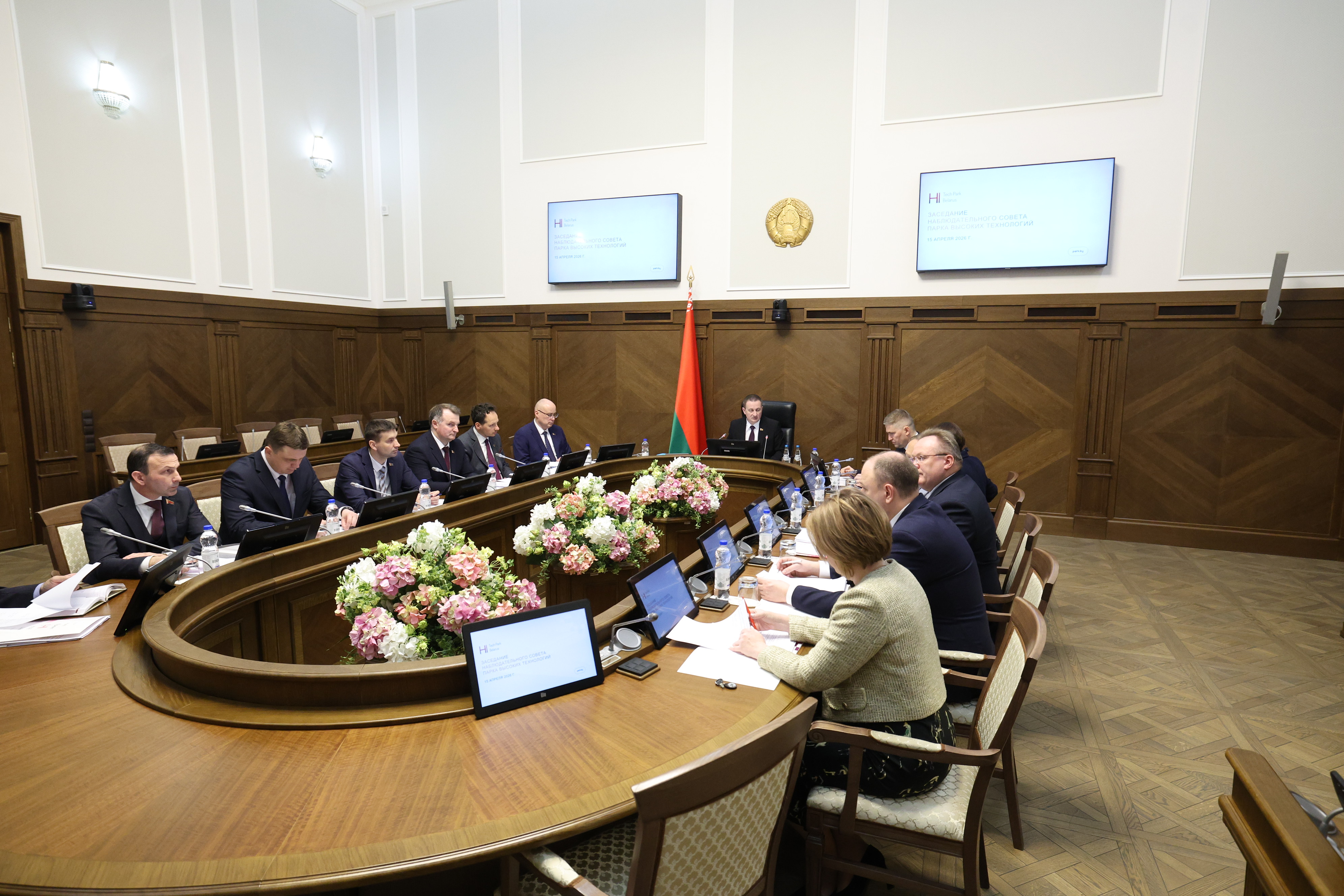
A meeting of the Supervisory Board of the Hi-Tech Park (HTP) chaired by Belarus’ Prime Minister Aleksandr Turchin took place at the Government headquarters on 15 April.
“Today we will take stock of the Hi-Tech Park’s performance in 2025, including the activities of its crypto-residents. We will also make decisions regarding the registration of new park residents,” Aleksandr Turchin emphasized.
The Prime Minister praises strong momentum: the number of new residents joining the HTP exceeds the number of companies leaving it for various reasons. The Supervisory Board also considered a number of issues and proposals related to the regulations governing crypto-residents and the Board’s own procedures.
“The results of last year inspire a certain optimism. All indicators are growing: revenue, exports, the number of residents, and employment in these companies. It is encouraging to see the park’s increasing role in the digitalization of our economy. This is an important trend that we must continue to develop,” Aleksandr Turchin said.
According to him, several priorities will shape the HTP’s work in 2026: the creation of an HTP digitalization office, approval of regulations for cryptobanks’ operations with tokens, coordination of funding for educational programs launched jointly with Belarusian universities, and defining performance indicators for the HTP Secretariat.
The HTP presented its key annual report. “We also plan to admit new participants and exclude those residents that have failed to meet their business plans. A separate block of issues concerns regulation of the crypto sector,” said Anna Ryabova, Head of the HTP Supervisory Board Secretariat.
She noted that work to support startup hubs at partner universities is nearing completion. “Today, 13 universities receive funding to support such hubs. The network for assisting early-stage startups is taking real shape,” she said.
In addition, the Supervisory Board will approve key performance indicators for the HTP Secretariat’s leadership, as the park is a significant sector of the national economy and operates under common performance evaluation standards.
The Hi-Tech Park currently has more than 1,000 residents, including 23 crypto-residents.